Auto-Renewal Laws Are Expanding. Here’s What Risk Teams Need to Know in 2026
Subscription-based business models remain one of the most effective ways for merchants to generate predictable revenue, improve customer lifetime value, and build long-term customer relationships. From streaming platforms and SaaS providers to subscription boxes, memberships, and recurring services, automatic renewal programs have become a foundational part of modern commerce.
But recurring revenue comes with recurring risk.
Unlike one-time purchases, recurring billing arrangements create ongoing opportunities for customer confusion, billing disputes, refund requests, and chargebacks. At the same time, regulators across the United States are increasingly scrutinizing how merchants disclose subscription terms, obtain consent, and allow consumers to cancel recurring services.
Likewise, regulators are paying closer attention to how businesses enroll, bill, and retain subscription customers. Across the United States, auto-renewal laws continue to evolve as lawmakers and regulators focus on transparency, consent, and consumer control.
As a result, subscription risk management in 2026 is no longer just about preventing fraud. It now requires merchants to balance customer experience, regulatory compliance, and dispute prevention simultaneously.
Why Subscriptions Create Elevated Chargeback Risk
Recurring billing models generate substantial business benefits, but they also introduce dispute risks that are less common in traditional transactions.
One of the most common drivers is simple customer confusion. A cardholder may forget they enrolled in a subscription, fail to recognize a billing descriptor, or overlook renewal notices. When the charge appears on a statement weeks or months later, the customer may contact their bank instead of the merchant.
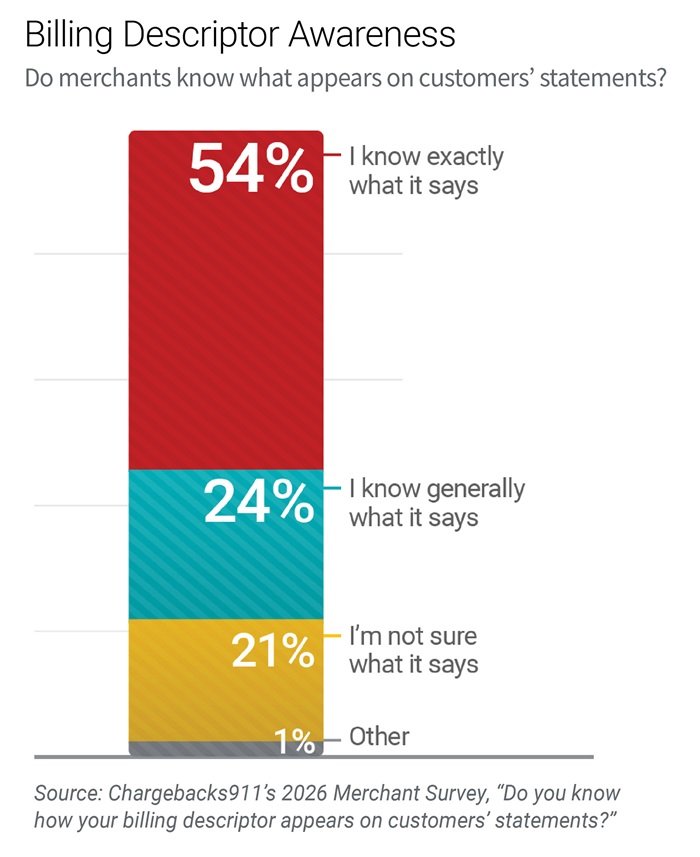
Often, these risks are exacerbated by a lack of familiarity on the merchant's side with their own billing descriptor:
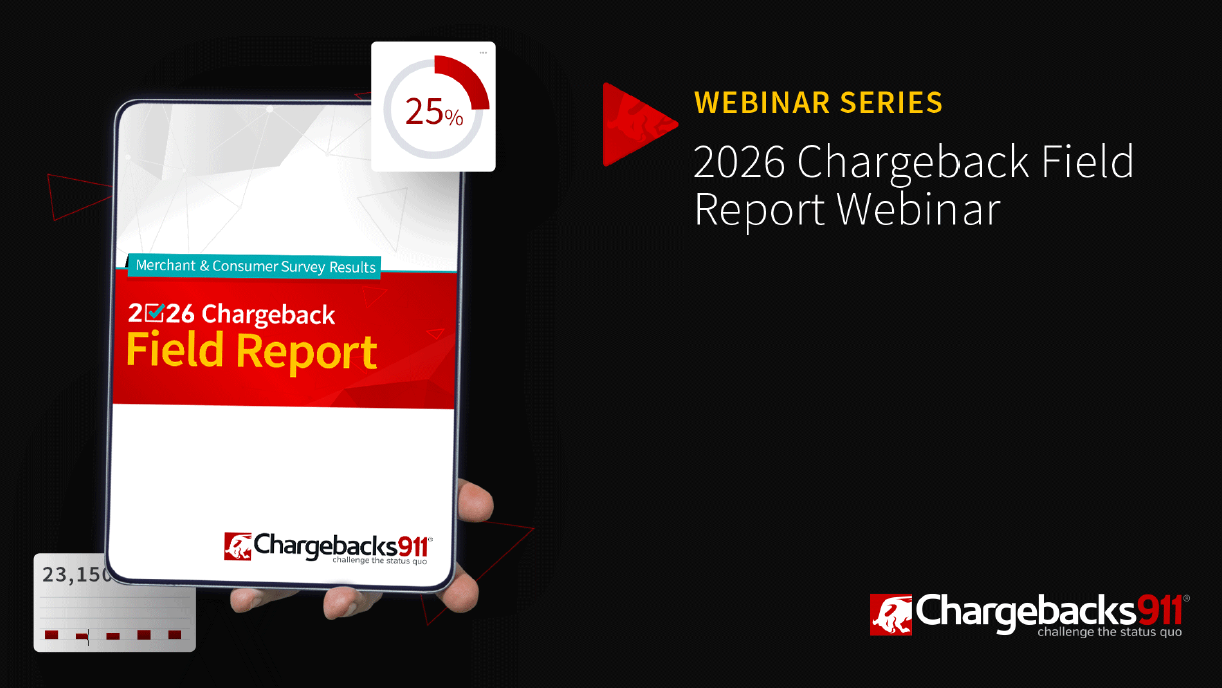
The 2026 Chargeback Field Report found that more than 32% of merchants identify subscription billing as a significant chargeback risk factor. Even more concerning, among merchants offering recurring payments, more than one-quarter do not send any pre-billing reminders to customers, while another 17% only send notifications after the charge has already occurred.
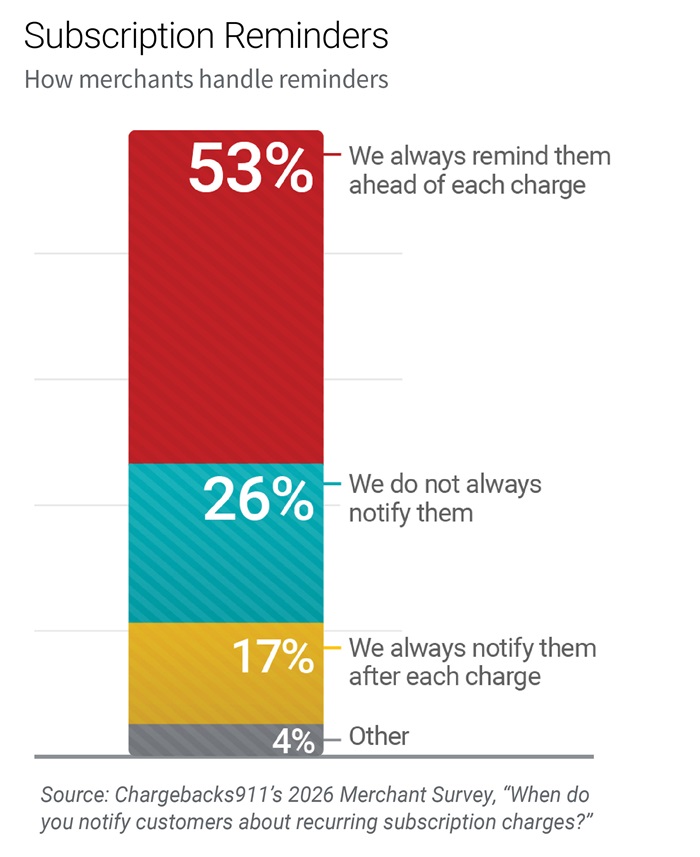
When customers are surprised by a charge, disputes tend to follow. These conditions create a perfect environment for first-party misuse, often referred to as "friendly fraud."
These breakdowns in communication are helping fuel a broader trend: the continued rise of friendly fraud. As customers increasingly turn to their banks to resolve billing frustrations, merchants are seeing first-party misuse grow faster than chargebacks overall.
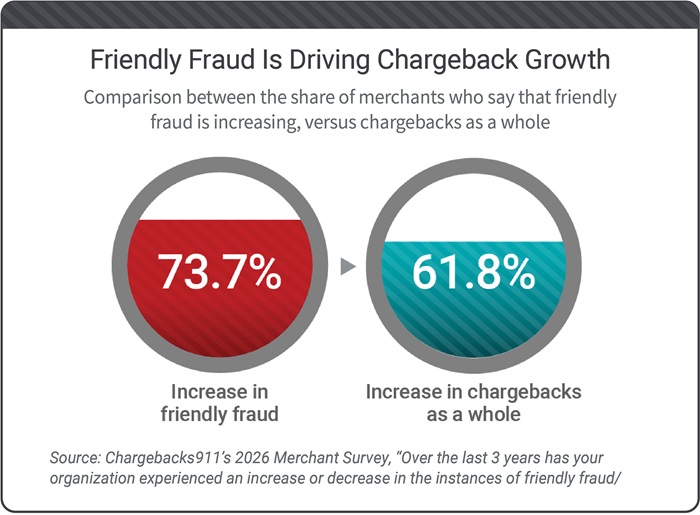
According to the report, 74% of merchants now consider friendly fraud a moderate or significant concern, while 83 of enterprise merchants report that friendly fraud has increased over the past three years.
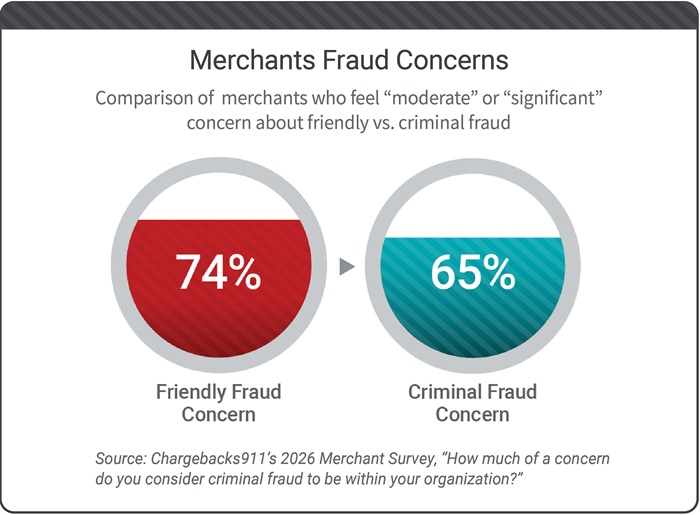
Subscription merchants are particularly vulnerable because many disputes originate from situations that fall into a gray area between intentional abuse and customer confusion. Examples include:
- Forgotten free trials converting into paid subscriptions
- Customers claiming they canceled when they did not complete the process
- Family members making purchases on shared accounts
- Subscription renewals that customers no longer wanted
- Refund requests filed simultaneously with chargebacks
These situations create elevated subscription chargeback risk and contribute to rising levels of subscription payment disputes across virtually every subscription vertical. In many cases, the merchant delivered exactly what was promised yet still absorbed the financial loss.
The FTC's Click-to-Cancel Rule: Where Things Stand
The biggest subscription compliance story of the past two years has been the Federal Trade Commission's proposed "Click-to-Cancel" rule.
In October 2024, the FTC finalized amendments to its Negative Option Rule that would have required businesses to make cancellation at least as simple as enrollment. The rule also sought to strengthen disclosure requirements and informed consent standards for recurring billing programs.
However, businesses should understand that the federal regulatory landscape changed significantly in 2025.
In July 2025, the U.S. Court of Appeals for the Eighth Circuit vacated the FTC's Click-to-Cancel rule on procedural grounds, preventing the rule from taking effect. As a result, the federal rule is currently not enforceable.
That does not mean subscription merchants can relax.
In March 2026, the FTC initiated a new rulemaking process aimed at revisiting and modernizing the Negative Option Rule framework. While the ultimate outcome remains uncertain, the agency has made clear that subscription practices remain a regulatory priority.
For risk teams, the practical takeaway is simple: even though the federal Click-to-Cancel rule is not currently in effect, many of its core principles continue to shape state laws, enforcement actions, and consumer expectations.
State Auto-Renewal Laws Continue to Expand
While federal requirements remain in flux, states continue to strengthen their own automatic renewal laws.
California remains the most influential example.
Amendments to California's Automatic Renewal Law (ARL) took effect on July 1, 2025, expanding compliance requirements for subscription businesses. The updated law strengthens disclosure obligations, imposes additional reminder requirements, and reinforces the expectation that cancellation mechanisms must be simple and accessible.
California's approach reflects a broader trend that is spreading nationwide.
More than 30 states now maintain some form of automatic renewal legislation governing recurring billing practices. These laws vary considerably in scope and enforcement, creating compliance challenges for merchants operating across multiple jurisdictions.
For example, Delaware requires merchants to clearly disclose:
- That a contract will automatically renew
- The deadline for cancellation
- The cancellation procedures available to consumers
- An online cancellation method when enrollment occurred online
Failure to comply can make the renewal contract voidable by the consumer.
Other states have adopted their own combinations of:
- Renewal reminder requirements
- Free trial disclosure requirements
- Consent requirements
- Online cancellation mandates
- Advance notice obligations before annual renewals
The challenge for merchants is that these rules are not always consistent.
A subscription workflow that satisfies requirements in one state may not fully satisfy obligations in another. For national merchants, particularly those operating online, this creates significant complexity around eCommerce subscription compliance and ongoing monitoring efforts.
The result is an increasingly fragmented compliance landscape where businesses must track dozens of evolving state requirements simultaneously.
Why Compliance and Dispute Prevention Are Becoming the Same Conversation
Historically, subscription compliance and chargeback management often operated independently. Today, the two functions are increasingly intertwined.
Many of the practices regulators are targeting are the exact same friction points that generate disputes and chargebacks.
Consider some of the most common causes of subscription disputes:
- Unclear renewal disclosures
- Difficult cancellation processes
- Poor customer communication
- Missing renewal reminders
- Confusing billing descriptors
- Delayed customer-service responses
Each creates customer frustration. Each increases the likelihood that a consumer contacts their issuer rather than the merchant.
The Chargeback Field Report highlights another important challenge: fewer than half of merchants know exactly how their billing descriptors appear on customer statements. Although 58% have taken steps to improve descriptor recognition, a significant portion still leave customers guessing about who charged their card.
That's encouraging progress, but it also highlights how seemingly small operational details can directly influence both compliance exposure and dispute volume.
When viewed through that lens, subscription transparency requirements aren't just legal obligations—they're dispute-prevention tools.
Best Practices for Subscription Risk Teams in 2026
As subscription regulations evolve, risk teams should focus on reducing both compliance exposure and dispute volume simultaneously.
1. Make Cancellation Easier Than Regulators Require
Even where state laws do not explicitly mandate click-to-cancel functionality, merchants should consider implementing it, as customers who can easily cancel are far less likely to dispute. Reducing friction at cancellation often lowers chargeback volume more effectively than fighting disputes after they occur.
2. Implement Pre-Renewal Notifications
Renewal reminders remain one of the simplest and most effective dispute prevention tools available. Providing advance notice before recurring charges helps eliminate forgotten subscriptions and reduces customer surprise. For annual plans and high-ticket subscriptions, multiple reminders may be appropriate.
3. Audit Billing Descriptors Regularly
Billing descriptors should immediately identify the merchant and, when possible, the product or service being billed. A customer should never have to investigate who charged their card.
4. Track Subscription-Related Dispute Reasons Separately
Not all chargebacks are created equal.
Merchants should isolate disputes involving:
- Recurring billing
- Trial conversions
- Membership cancellations
- Unrecognized transactions
- Refund timing issues
Doing so provides greater visibility into root causes and helps identify operational weaknesses before they become compliance issues.
5. Preserve Evidence Before Disputes Occur
When subscription chargebacks arise, evidence often determines the outcome.
Risk teams should retain:
- Enrollment records
- Terms and conditions acceptance logs
- IP addresses and device data
- Renewal notification records
- Cancellation requests and responses
- Customer service interactions
The 2026 Chargeback Field Report found that evidence collection remains merchants' single biggest representment challenge. Building evidence workflows proactively can significantly improve recovery rates when disputes occur.
6. Align Compliance and Risk Teams
The most effective forms of subscription merchant risk management occur when compliance, fraud, payments, and customer experience teams work from the same playbook.
When these functions operate independently, gaps emerge. Those gaps often become disputes.
Looking Ahead
Subscription regulations are evolving quickly, but the underlying challenge remains the same: reducing customer friction before it becomes a dispute.
As regulators push for greater transparency and consumers demand easier cancellation experiences, merchants face increasing pressure from both compliance requirements and rising friendly fraud. The good news is that the same practices that improve compliance—clear disclosures, transparent billing, proactive communication, and simple cancellation processes—also help prevent chargebacks.
The merchants that will thrive in this environment are those that stop viewing compliance and dispute management as separate functions and instead treat them as two sides of the same risk strategy. Doing so will help protect revenue, strengthen customer trust, and support long-term subscription growth.
About Chargebacks911
Chargebacks911® is the global leader in chargeback prevention and remediation technology. As a platform provider to merchants and financial institutions, Chargebacks911 is the first global company fully dedicated to providing an end-to-end platform specifically designed to counter post-transactional fraud and chargeback misuse. Today, Chargebacks911 safeguards more than 2.4 billion transactions per year on behalf of clients in 87 countries around the world, supporting over 2.5 million merchants. For details on Chargebacks911's comprehensive dispute management solutions, visit https://chargebacks911.com.